


When malpractice claims surface, the blame usually lands on legal judgment. Missed deadlines. Bad advice. Strategy gone wrong.
But a surprising number of serious problems do not start with lawyering at all.
They start with documents.
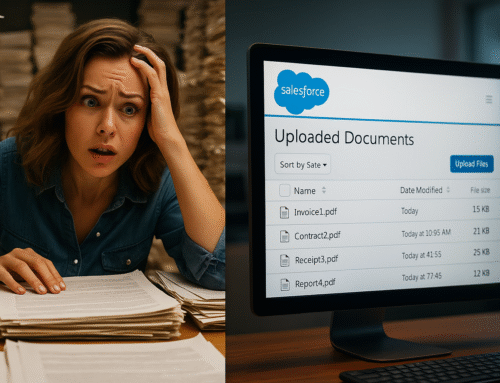
A scanned exhibit filed under the wrong matter. A signed agreement overwritten by a second scan. A key document that never made it into the system everyone assumed it lived in.
By the time these issues appear, often during discovery or dispute, the scanner is long forgotten. The damage is already baked in.
The Risk Nobody Assigns Ownership To
Law firms are excellent at managing visible risk. Confidentiality policies. Ethical walls. Retention schedules. Discovery protocols.
Document intake, however, tends to live in the background. It is treated as administrative. Clerical. Low risk.
That assumption is expensive.
Scanning is the moment when paper becomes evidence, record, or liability. It is where chain of custody begins. It is where confidentiality is either enforced or quietly compromised.
The American Bar Association has been clear that attorneys are responsible for the systems they rely on, not just the advice they give, particularly under the duties of competence and confidentiality outlined in the ABA Model Rules of Professional Conduct, specifically Rules 1.1 and 1.6.
5 Ways Small Scanning Mistakes Can Become Big Legal Problems
1) Wrong Matter Filing Happens More Than Firms Admit
If staff can scan without enforced matter selection, documents will land in the wrong place. Not maliciously. Just efficiently.
The result can be exposure across ethical walls or confidential material surfacing where it should not exist. Once a document circulates internally, it becomes very difficult to prove who saw what and when.
2) Version Confusion Is a Silent Killer
Rescanning is common. Updated agreements. Signed copies. Last minute changes.
Without controlled intake, firms end up with multiple versions that all look final. During disputes, opposing counsel will challenge authenticity, timing, and completeness.
Courts care deeply about document authenticity, as reflected in the Federal Rules of Evidence, particularly Rules 901 and 902. They do not care that a scanner was busy or a deadline was tight.
3) Chain of Custody Starts Earlier Than Most Firms Think
Chain of custody does not start in the courtroom. It starts the moment a document enters the firm’s control.
If a firm cannot clearly show who scanned a document, when it was captured, and where it was routed, the evidentiary value of that document becomes vulnerable. This gap often surfaces when the firm least wants to explain it.
4) Scan to Desktop Is a Risk Factory
Scan to desktop. Scan to email. Scan now, upload later.
These workflows create uncontrolled copies of confidential material on local machines, shared inboxes, and personal folders.
Under ABA Rule 1.6, firms must take reasonable steps to prevent unauthorized disclosure of client information. Allowing sensitive documents to proliferate across endpoints makes that standard harder to defend.
5) Discovery Failures Are Often Intake Failures
Missing documents during discovery rarely disappear intentionally. More often, they were never ingested correctly.
Courts have shown increasing intolerance for discovery failures tied to poor information governance. When a firm cannot locate responsive documents because intake was inconsistent or informal, sanctions become a real risk.
Why Training and Policy Do Not Solve This
Most firms respond with more training. More checklists. More reminders.
That helps, but it does not scale.
Intake happens under pressure. Filing deadlines. Closings. Investigations. High volume discovery. In those moments, risk reduction depends on systems that enforce good behavior by default, not on perfect human execution.
Storage Is Not Control
Many firms believe document risk is addressed because they have a document management system or cloud storage.
Storage is not control.
Control means staff cannot scan without selecting a matter. Documents cannot land in unapproved destinations. Metadata is required at the moment of capture. Every action is logged automatically.
Control starts at ingestion, not after documents are already scattered.
What Firms With Lower Intake Risk Do Differently
Firms that quietly avoid intake disasters tend to follow a simple model.
Scan once.
Route directly.
Capture metadata immediately.
Eliminate local handling.
Log everything.
This removes discretion from the riskiest step in the document lifecycle and dramatically improves the reliability of downstream systems. It also reduces rework, confusion, and uncomfortable internal investigations later.
Where ccScan Fits Without Making Noise
ccScan is not an attorney-facing tool. That is intentional.
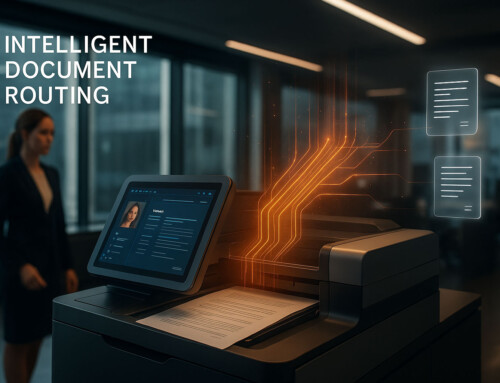
It functions as intake infrastructure.
For law firms, ccScan enables scan-to-matter workflows, enforced routing to approved systems such as Salesforce, SharePoint, Box, Google Drive, and Amazon S3, required metadata capture at scan time, elimination of desktop or email handling of sensitive files, and automatic audit-ready logging.
The benefit is not speed. It is defensibility.
A Quick Reality Check for Law Firms
Ask yourself honestly.
Can staff scan documents without choosing a matter?
Can files land outside approved systems?
Can you show exactly who scanned a document and when?
Can intake bypass confidentiality controls?
Can you demonstrate chain of custody quickly if challenged?
If any of those answers are no, intake is a quiet risk multiplier.
Final Thoughts: The Scanner Is Boring Until It Is Not
Legal malpractice rarely announces itself at intake.
It shows up later. When a document is missing. When a version is disputed. When confidentiality is breached. When discovery gets uncomfortable.
By then, the scanner is forgotten.
Risk-aware firms understand that document intake is not clerical. It is foundational. And the quietest systems often carry the most responsibility.
Your next steps?
If your firm still relies on scan to desktop, shared folders, or manual uploads, intake may be the weakest link in your risk posture.
ccScan helps law firms enforce secure, matter-centric document ingestion without disrupting legal work.
Explore the ccScan product line here.